Or how to play cards in German
by Guy Thompson
I made a mistake.
No one in the room was going to call me out on it, perhaps out of politeness or maybe out of embarrassment on my behalf, but I had clearly made a mistake, and I had been in the Glüßing-Lüerßen household for all of five minutes.
The mistake was this – I had asked for coffee.
Moments after we walked into the kitchen/breakfast nook, my suitcases and other paraphernalia still sitting by the front door, I had been given a choice. Would I like hot tea or coffee?
German coffee is, to me, truly what coffee is supposed to be. Rich. Dark. Tasty, too. It actually has, and I know this will be confusing for a lot of Americans, coffee flavor. For over three months, I had been drinking good German coffee anywhere and everywhere, from farmhouse kitchens to streetside cafes in Berlin. It was with this in mind that I asked for coffee, bitte (please.)
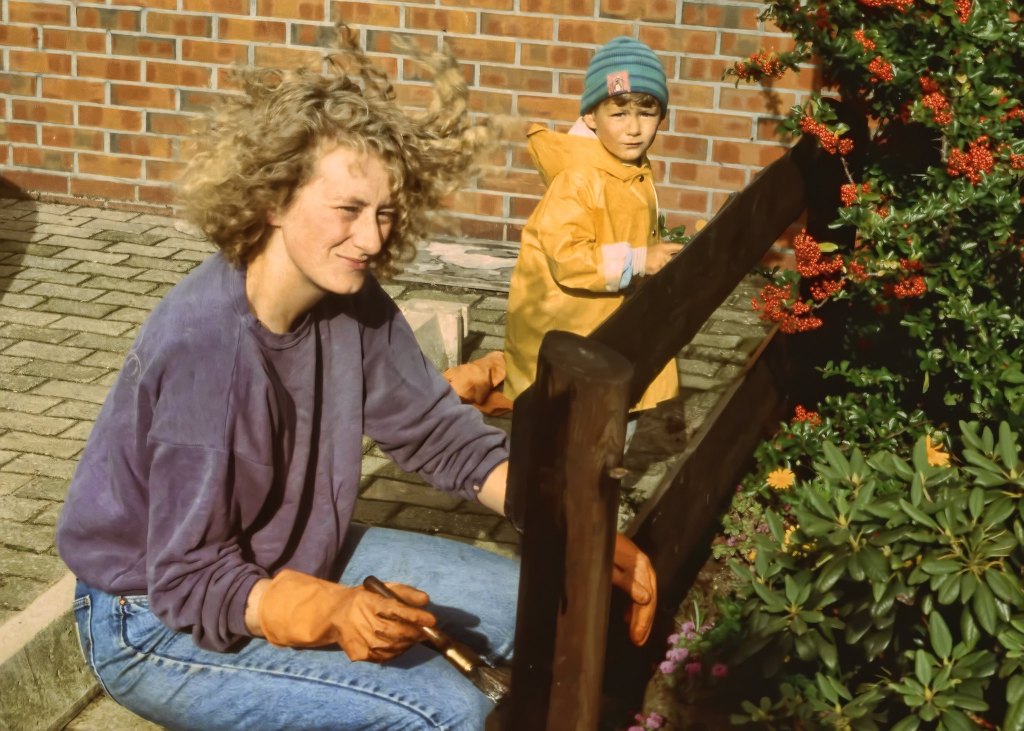
My host mom, Anke, a shock of curly hair bouncing around her head as she went from cabinet to cabinet, quickly pulled out the coffee pot from where it had been stored, found the bag of ground coffee hiding behind things in another cabinet, got the water poured in, coffee grounds measured, and finally, turned the maker on to start making what was, as was no surprise, a rather good cup of coffee. Sugar? Well, as noted earlier, I used to take a lot (perhaps we should be completely honest here and say A LOT) of sugar, so yes, bitte.
The others, the Landjügen contact person who was dropping me off, my host dad Carsten, along with Anke, were having tea, which took Anke mere moments to get started. The kettle was already filled with water. The loose black tea leaves were right there in a canister on the countertop. Rock sugar in a nice glass dish.
Ah, I said to myself, you should have asked for tea. Duly noted.
Anke, to be perfectly honest, was happy to make coffee. I was the only one drinking coffee though, and seeing how effortless it was for her to make the tea, I deduced that here, in the northern part of Germany, tea was the preferred hot drink. From that point on, I only asked for tea. Tea for breakfast. Tea at, well, tea (lunch.) Maybe a cup later in the afternoon when we all took a break from the farm work of the day.
Turns out, there was a tea shop just down the road in Elsfleth, the town my fifth host family lived near. Turns out, there were tea shops in about every town we went to for the next three weeks.
A year later, when a package arrived from Elsfleth for our wedding, it contained a beautiful tea set, and some very tasty black tea.
##
If anyone is counting, we’re up to four Carstens in host families.
##
There was a man out in the barn with his arm in a cow, up to his shoulder.
The cow, which should be stated right away in order to avoid any distress for readers, was taking it all in stride.
This was still my first afternoon on the Glüßing-Lüerßen farmstead, shortly after the debacle with the coffee. I had heaved my luggage up to a room on the second floor, which was always a good reminder of how much I overpacked. In fact, I had more now, as a package from home had caught up to me in Berlin. It contained clothing for colder weather, which was going to come in handy pretty soon, as the Glüßing-Lüerßens were just 25 miles from the North Sea coast, and about 50 miles from the border with The Netherlands. The land around the farm was flat, with deep ditches, and verdant fields dotted with cows.
Well, except the one with a man’s arm in it.
Anke had told me that Carsten was out in the barn if I wanted to go see what he was doing. Sure. Jump right in was the best way to fit in with a new family. The barn and house were connected by a breezeway/mudroom, the place where, time after time over the next three weeks, muddy boots would be slid off with great effort, and left to dry until the next foray into the verdant fields.
Carsten was halfway down the row of stalls in the long barn with another man. And the cow. Was the cow having problems standing on its own? As I walked towards them, it appeared to me that the man was leaning heavily against the side of the cow, as if trying to support it. Carsten saw me approach and waved me closer. I walked up the aisle of the barn and then came to a stop when I saw that the man, a veterinarian, was not, in fact, merely leaning against the cow, but leaning into it. Literally. About three-quarters of the way back on the flank of the cow, the vet’s arm did a neat little disappearing trick. Here was his shoulder. A bit of his upper arm. And then — POOF — the rest of his arm was gone from sight.
Again, I assure you that the cow was just fine.
There was, somehow, no blood visible, but it was still a rather alarming sight for someone like me who hasn’t hung around large animals much, let alone while a veterinarian was working on them. Carsten explained that there was something wrong with one of the cow’s stomachs. Stomachs? Well, technically one stomach, I learned, but cows have four separate parts of the one stomach, and the veterinarian was diligently working to find out what was wrong with one of the parts. I watched from a distance, not wanting to get in the way, and was very thankful that I wasn’t asked if I wanted to put my arm into the cow.
As an exchangee, one gets a lot of those types of questions. Someone in the host family is going to the store. Do I want to go along? Sure. A family friend is going to a nearby city for the day. Want to join them? Okay. We’re taking the recycling into town this afternoon. Care to help? Well, not exactly exciting, but count me in. But from time to time, there were things I wasn’t asked to help with. At the Gaths, my first family, they had let me work in the house on some postcard writing or something instead of asking if I wanted to dehorn some calves. I was thankful for that. I sort of wished I hadn’t been asked to pick plums for days on end, but some things just can’t be avoided.
I did avoid doing what would have been a terrible impression of a veterinarian had I been asked if I wanted to stick my arm in the cow.
The cow, as I’ve stated, was fine throughout all of this and was, I recall, still alive when I left.
##
I was back on a farm and resuming my efforts at farm work. The Glüßing-Lüerßens had a large dairy farm, and I helped where I could. Oddly enough, a lot of “helping out” included a sort of babysitting.
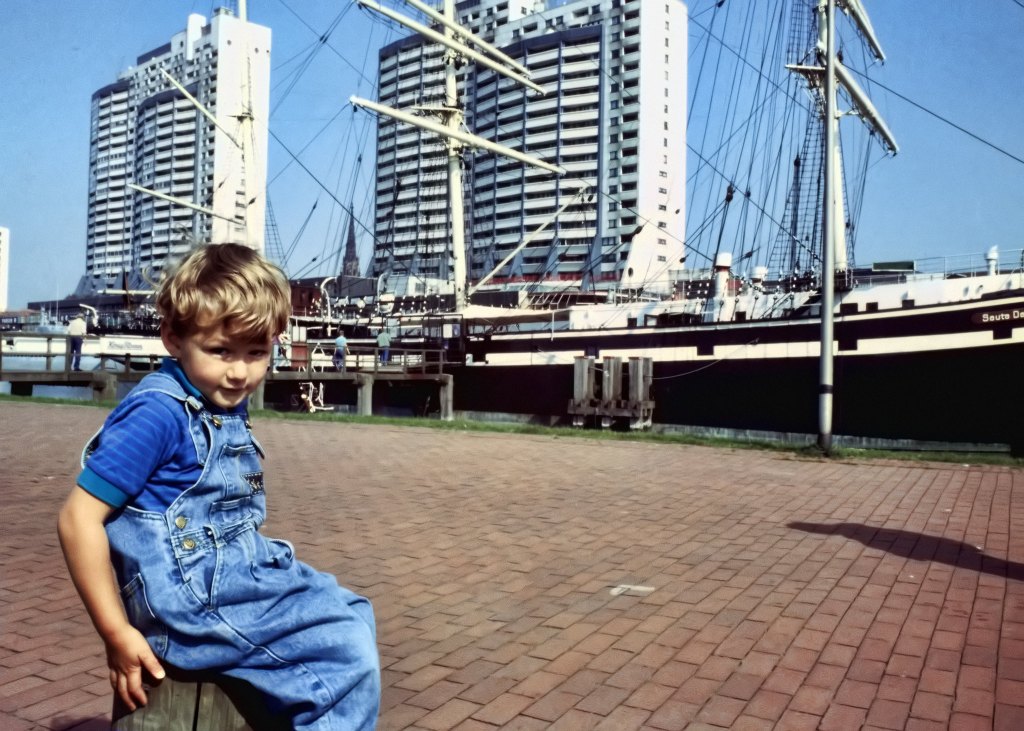
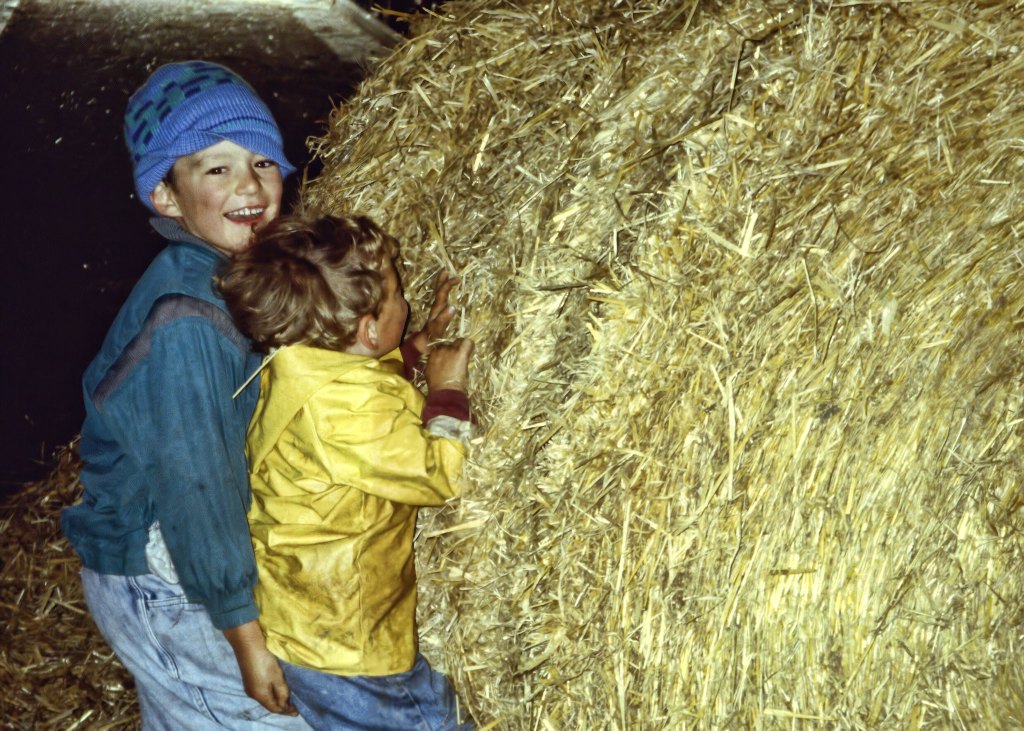
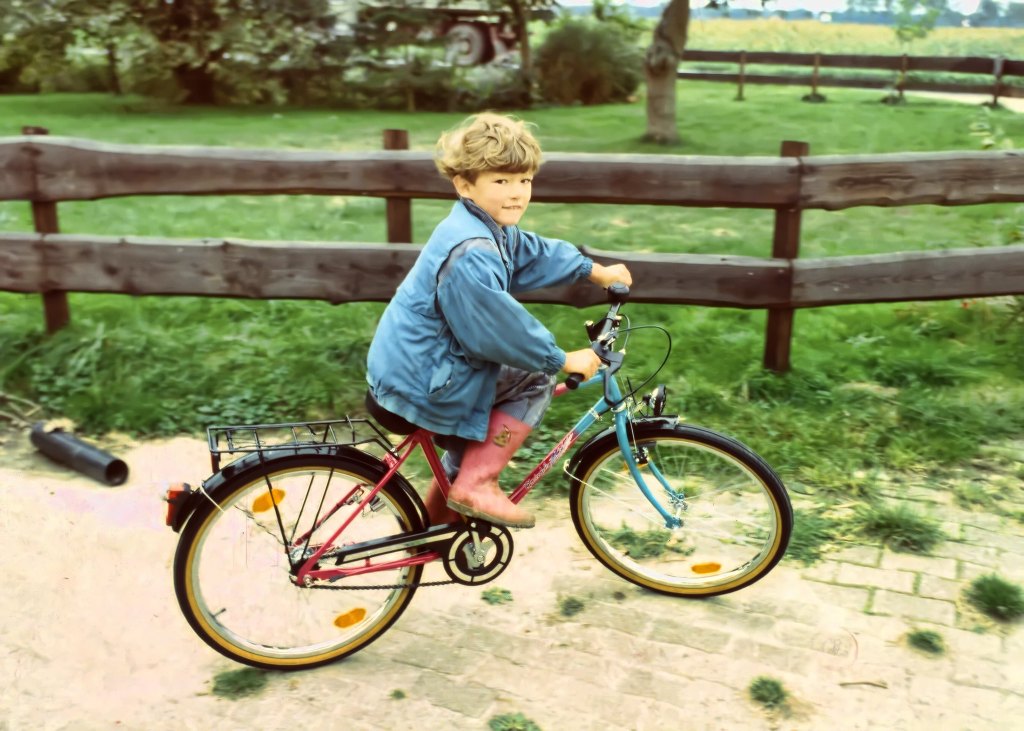
Along with Carsten and Anke, the household was completed by two very energetic boys, Jan Eicke, 3, and Arndt, 6. Jan Eicke’s idea of fun was for me to toss him onto a pile of hay again and again. And again. Arndt was really into playing outside, usually where there was plenty of dirt. Or inside, where there were plenty of Legos. Generally, we didn’t combine the Legos and the dirt. Ardnt was in Kindergarten, that most German of educational institutions, and by the second day, I was fitting in well enough with the family that I was tasked to drive the car over to his school to pick him up at the end of the day.
In Berlin, I had seen my entire host family together twice. True, Carsten had his own place and Marcus was in a completely different Bündeslander. With the Glüßing-Lüerßens, it was a rare time when all five of us weren’t together unless Arndt was in school, or Anke running into town, or Carsten was out in a field. Meals were almost always together. There was usually some time in the evening when all of us would sit in the front room playing a game, chatting, or just watching a little television. The boys would be shuffled off to bed early in the evening. I now question the logic of letting them sleep longer than the rest of us, as that only gave them the opportunity to have more energy in the morning.
Still, they were a blast. It wasn’t unusual for me to have a little shadow, as it were, as I helped around the farm.
##
And help I did.
Well, except for that 5 a.m. milking thing. And the afternoon milking thing.
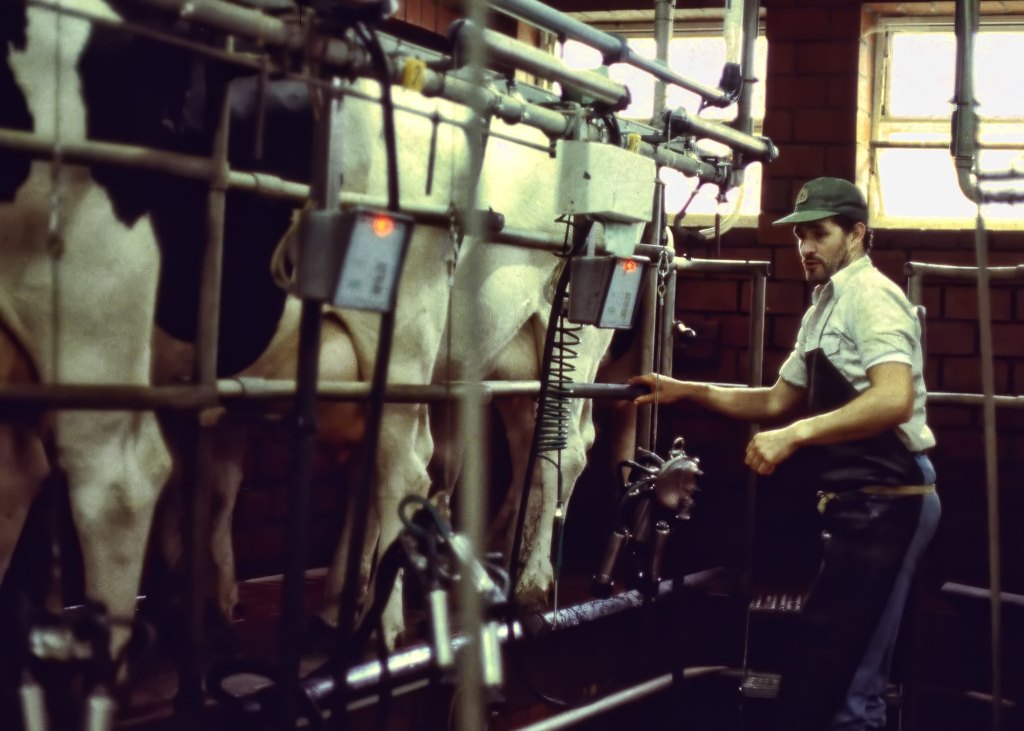
The family had a nearly new milking parlor that appeared, to me at least, semiautomatic. The cows sauntered in through one door and were directed by automatic gates into a stall, where their undercarriage, as it were, was cleaned off by a spray of water and disinfectant, before the milking apparatus was swung over and, finally, a human would put it in place and let the machine do its work. Once it detected the cow was empty, the system would detach the milking apparatus, open the gate, and the cow would saunter back out to the field. It seemed to me that this would be just about the easiest way for me to learn and help with milking cows.
It still didn’t happen.
Carsten, his father, who lived the next house down the road, and Anke, had this all sorted out like a well-oiled Swiss watch. I was more like the knock-off watch brand you see at the flea market. I watched. I took photos. I stayed out of the way, much like I did when the vet had his arm inside the cow.
The work itself was never that difficult, due to how well they had everything set up. Feeding was pretty automatic for the cows in the barn. Other cows that roamed the field had to be rounded up and moved from place to place. I soon discovered the secret to moving cows – you walk towards them. You get around in the opposite direction that you want them to go, and you start walking toward them. That’s it. Make sound if you want, but they don’t seem to care about that. Once one or two start going in the prescribed direction, the others seem to want to see what’s going on and follow. As long as gates are open and/or fences are in the way, they end up where you want them to go.
##
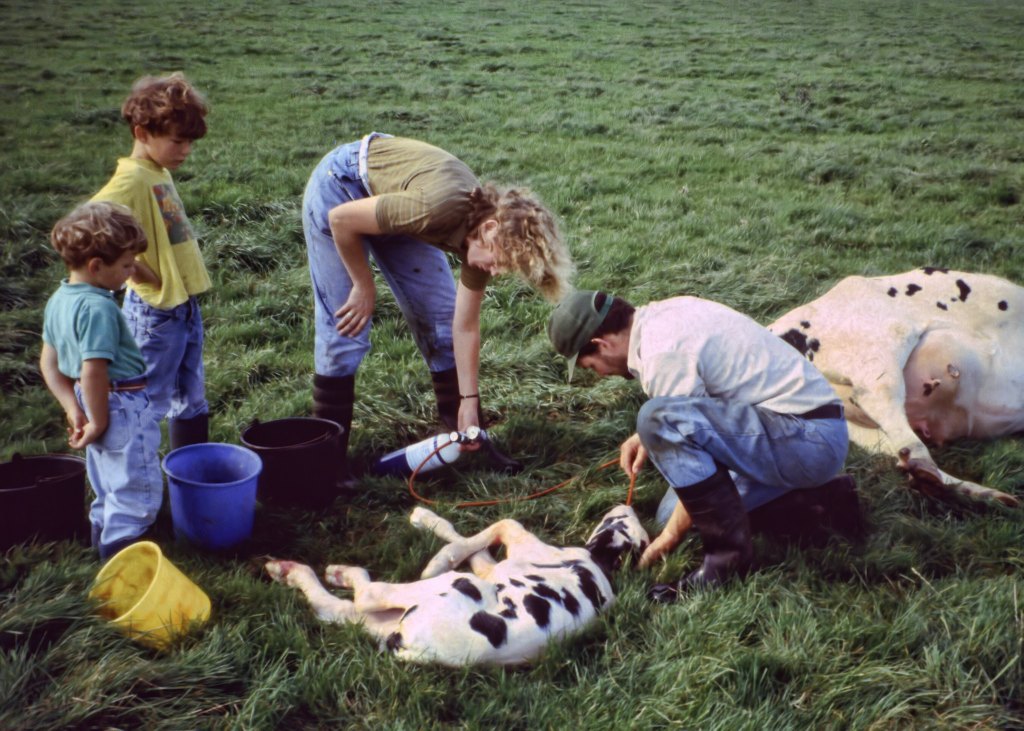
There was a regular population explosion on the Glüßing-Lüerßen farm during the month of September, with around 20 calves born while I was there. It seemed like every time I was out in the barn, I would turn around, and there were Carsten and Anke (and usually the boys) bringing in another calf. It was common for all four of them to be out in the field when a calf was delivered. The boys would watch as Carsten and Anke assisted, if needed. A few did need some help getting out into the world, and on at least two occasions, that involved me pitching in… or rather, pulling out.
One time, Anke had to use a hand crank to pull the calf out. Wrap some rope around the feet of the calf that was having difficulty, and start using a crank to winch it out. I held the other end as the anchor.
The second time I assisted, Carsten’s father was there, and this one was in a stall late in the evening. I mostly stood there and, when asked, would lend a hand in pulling on a hoof or other part. This one was being more difficult than any others I had witnessed so far, and they were clearly concerned about losing the calf and the cow. Anke was at the head of the cow, holding it still (this was never any fun for the cow, either), while Carsten and his dad worked on the other end. It became apparent that they were going to need additional pull, so Carsten’s father turned to me and asked me to get him “Das towel. Das towel!”
I looked around the stall. No towel. Not even a rag. Did I need to go to the kitchen to get one?
“Das towel!” he repeated and pointed towards the far wall.
I looked. Nope. No towel there.
Finally, he gave up and went over and grabbed a rope. Ah. Not towel.
Turns out, “rope” in German is “tau,” which sounds very much like the word towel.
The calf, by the way, was fine, as was the cow.
##
It is worth noting that I didn’t lose a watch at any time while helping deliver the calves.
##
Also among the typical farm activities I got to help out with was shoveling “mist.” Mist, as it turns out, is one of those funny words that sound just like its English counterpart, but means something completely different. In this case, mist is German for manure.
I later heard the story of an IFYE in Switzerland who, while up on a mountain viewing the sights with their host family, commented how sorry they were that they couldn’t get a good picture of the mountain due to all of the mist in the air. The host family, it was reported, was very confused by this statement.
There were also umbrellas one could buy around Germany that had the words “Mist Wetter” printed on them – manure weather. Apparently, America doesn’t have the market on top-notch humor to ourselves.
##
To be honest, I was really surprised the duck didn’t come home with us.
No, there wasn’t any alcohol involved in this incident; just the strong desire of two young boys who had decided that what they wanted right now was a duck.
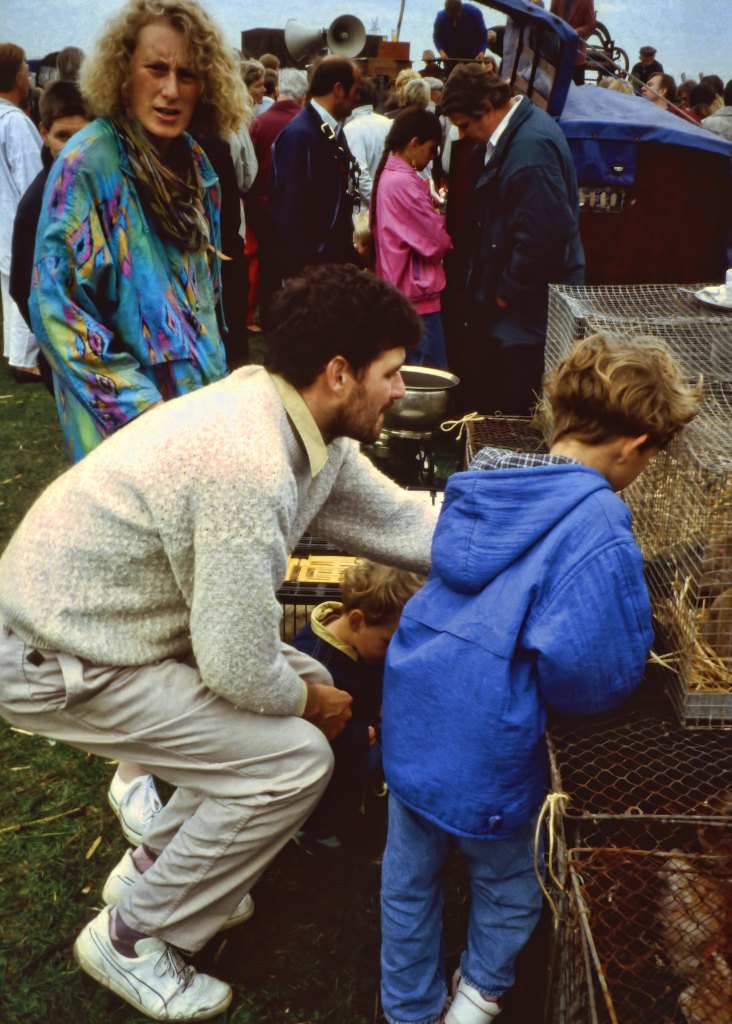
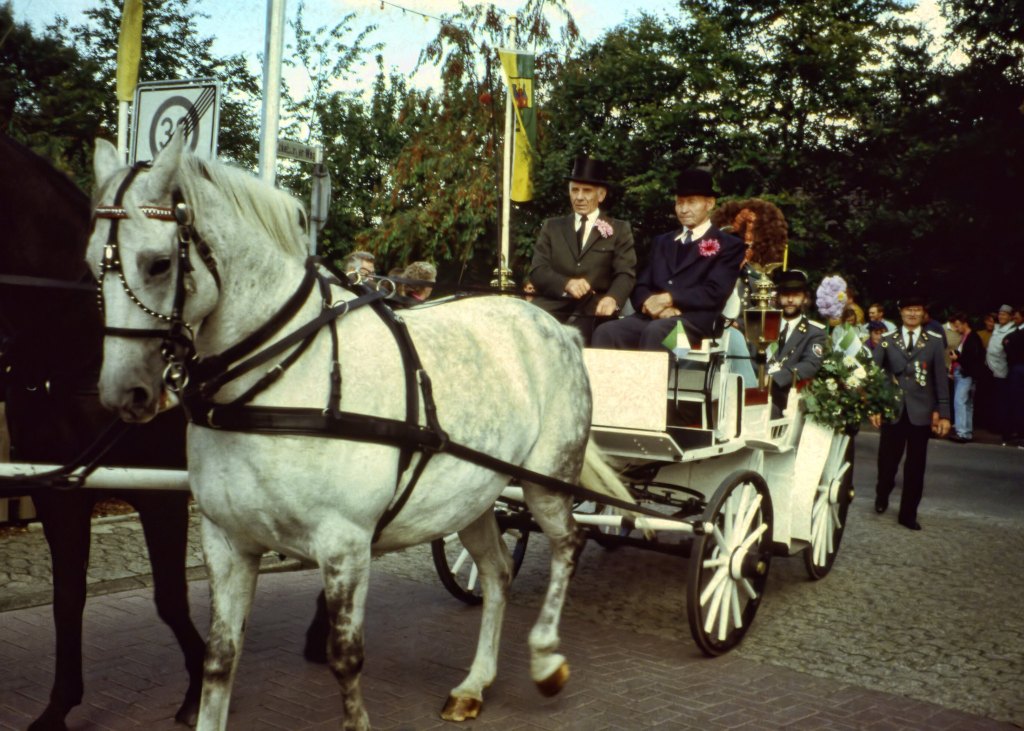
At the end of the first week of my stay with the Glüßing-Lüerßens, the whole family loaded up in the VW Passat and headed up the road about 12 km to Ovelgönne, which was holding a village street festival and horse sale. There was a parade earlier in the day with a local marching band, horses all decorated and dressed up, and a few floats, including one that I could only assume was the royal court for the festival. They looked about as excited as every royal court I’ve seen in a parade.
Following the parade, we went to the festival grounds at the end of the town, which had the normal festival vibe to it. Food vendors. Stalls selling items, both horse-related and not. And ducks. A trailer had the back open, and the owner had placed a little fence around it, allowing the ducks to waddle in and out of the trailer. Arndt and Jan Eicke were fascinated with the ducks. They should have one! At least, that seemed to be their argument to Carsten and Anke, who were not quite on the same page as the two boys when it came to something like ducks. Ice cream? Okay. Sweet, doughy treats? Got them. A duck? Hold your horses.
But the boys had a convincing argument to support their opinion. They really wanted a duck. It would be fun! Surely it wouldn’t take much to have a duck hanging around with the cows. Right?
In the end, Carsten and Anke could not be swayed from their opinion that what the farm needed the least right now was a duck. I could have gone either way. After all, I wouldn’t be here in two weeks, so the long-term care of the duck was not going to be something I would need to deal with. But it would have been fun while I was there.
Meanwhile, here and there around the festival grounds, other sales were taking place. The horse sales were interesting to watch, as they haggled on a horse, that wasn’t actually there, until they came to an agreement, whereupon they would slap hands with each other, and walk off away from the crowd to exchange the money. It was, for the crowd, great entertainment, apparently, and some of the buyers or sellers were more entertaining than others. They would act as if really considering a price that was just offered, chewing a lip or rubbing a chin. Then come back with another number. Then SLAP. Done deal.
##
It wasn’t very often that I got to teach my German families something new.
Friends of theirs had just had a baby. Carsten, Anke, along with Melissa, whose family was just up the road, and myself, went over to the family’s house to celebrate. Turns out, the newborn and mom were still in the hospital, doing well, but staying there as was customary for their system.
The new dad was hosting us, and pretty soon, drinks were being passed around while we visited. Toasts were made to the newborn. The parents. The future. Etc.
Why not play a game? Sure.
Games with the Glüßing-Lüerßens were pretty common. In the evenings after the boys went to bed, our time relaxing downstairs would often include a board game. “Mensch,” the German version of the board game “Sorry,” was a favorite of ours. Word games were, obviously, not possible, though my German continued to progress. The new dad didn’t have Mensch, but maybe a card game. They asked me if I knew any card games to teach them.
I did.
In Ohio, I spent four years on our county’s Junior 4-H Fairboard. These were 4-Hers who assisted in running the 4-H part of the county fair, which involved office and other duties throughout the week. It wasn’t unusual to get to the fairgrounds around 8 a.m. and not leave until after midnight. Not that we were working until midnight. Rather, a group of us would likely end up in one of the campers of someone who was staying on the grounds, playing cards until after midnight. And our favorite game to play was called Bullshit. (That was the one word. We’re all clear from this point on.) That translated, I found out, into the word Quatsch in German. The literal translation of that back into English was “nonsense.” Close enough.
The game involved dealing out all of the cards to everyone playing. The first player would then lay a card (or two) facedown, telling us how many cards, and claim that it was the Ace. The next Player would put a card, or cards, facedown and say how many twos he or she had just put on the pile. And so on. At any time, another player could call them out — Quatsch! If the player challenging the other player was right, the player who put the cards down would then have to take up the entire pile. If the challenger was wrong, then they had to take up all of the cards that were in the pile. Play would continue until one player got rid of all of his or her cards, making them the winner.
We gleefully played Quatsch well into the night.
##
It was date night.
At least, we all looked like we were going out on a date. Carsten and Anke were dressed up and looking pretty sharp, him in a purple sports coat and tie, her in a black cocktail dress and heels. I had on the single tie I had brought with me. No dress jacket because where was that going to fit in among all of the other things in my over-packed suitcases?
We were off to the annual Farmers’ Ball. The event was to hand out various farming-related awards for the past year to farmers in the region. Milk production. Cows produced (I thought we were really in the running for that one!) Best farmer singing to his cows. That sort of thing.
But really, it was a party, filled with the fast-paced dancing that seemed to be the only way Germans knew how to dance. And, oddly enough, drinking was involved. There was one liquor that they had us try, called “corn.” Now I don’t think that’s the actual word for it, but phonetically, that was what it sounded like. It was red. Sweet. Edging towards syrupy. And potent. That stuff would have knocked a cow back on its haunches at fifty paces. The really dangerous part of this drink was that it didn’t taste like alcohol. You could drink one after another without really feeling like you were drinking hard liquor. But that’s what it was. I stopped after a couple, upon reading the bottle and seeing the alcohol content listed on the side.
Like a lot of parties, the alcohol-fueled the dancing. The dancing fueled the drinking. It was a vicious cycle. I was always amazed that the medics never got called into these things.
##
About an hour from the Glüßing-Lüerßen’s farm is a whole museum filled with barns and farmhouses. This was Museumdorf Cloppenburg, an open-air museum that traces German farms in Lower Saxony, the state we were in, from the 1600s until the late 1800s, along with a variety of windmills (not just for the Netherlands!) and other outbuildings. We were joined by Melissa and her host family for the day of wandering through the history of farms.
For those thinking that this had to be boring, you would be so wrong. It’s actually a brilliant museum and a great way to see a lot of history, pleasant history in this case, in one place. I could have used a museum or two like this back in Berlin to even out all of the hard, dark ones we saw. Museumdorf Cloppenburg remains one of my favorite museums to this day.
I recalled back to my time in the Black Forest with Otto and traveling from farm to farm high up in the hills, and my relative shock at seeing houses that were on the upper level of the barn. That seemed luxurious compared to the ones from the 1600s, which were one long building with animals at one end and humans on the other, often without a wall to separate them until well into the 1700s. Some had little sleeping alcoves set into the walls. You would climb into bed and slide a panel shut for bedtime, to keep the warmth in and the animals out. The buildings were mostly timber-framed with thatched roofs. It was a lot of picturesque scenes in one place, and I really had to pace myself on taking pictures.
It was also a pretty tiring day. All three boys (I’m counting Carsten here!) were dead asleep in the backseat on the drive home.
This is another one of those days that I return to again and again after my six months there. With most families, I had a couple of days like this – the trip along the Rhine with the Gaths, the wine tasting cruise with the Höflichs, and so on. There were quite a few days like this with the Glüßing-Lüerßens, and this day joins the others towards the top of the list from my entire time there.
##
Host families seem to always want to apologize for two things.
The first, usually, is to apologize for their poor English. Any of them that spoke English a) spoke it better than I spoke German, and b) never seemed to expect me to apologize for my lack of knowledge of German vocabulary. Counting all of my host parents and siblings, I would say about half spoke English very well, half spoke it well enough to be understood, and the other half didn’t speak any at all. Most of them were also, I should note, better at math than I am.
This was just past the halfway point of my entire time in Germany. I had learned enough German to ask basic questions, understand most directions (requests for rope notwithstanding), and hold down my end of basic conversations. Anything approaching spirited debates on the pros and cons of current EU agricultural directives was, alas, beyond my linguistic abilities. Probably still is.
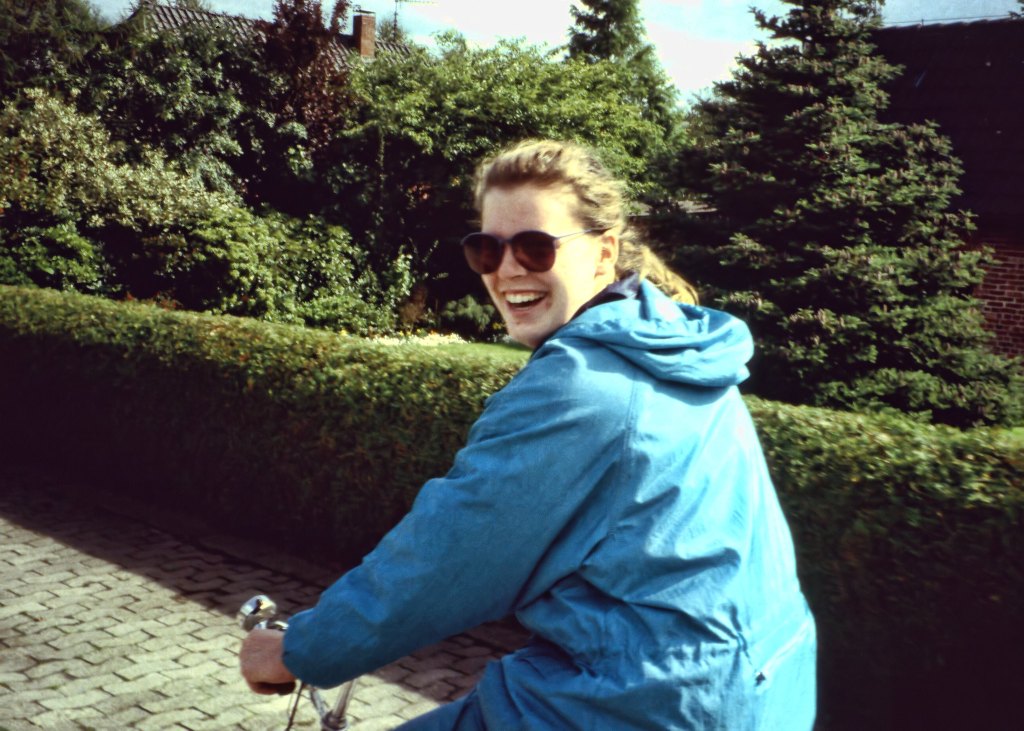
The second thing most of my host families apologized for was, in their words, that it was so boring around here. Only after purchasing a map with much finer details was I able to find all of the towns I would be living in, or, as was more often the case, living near. Only the Brudys and the Plutas actually lived in their town/city. The Glüßing-Lüerßens lived about 4 km to the west of Elsfleth, a fact driven home the first afternoon I was there as Carsten, Ardnt, and I took a bicycle ride into town, up over the river, around, and back again. Good thing I was still in shape from all of my distance running.
Was there nothing to do? Absolutely. Loads of nothing within shouting distance. The Cloppenburg museum was an hour away. Bremen, the closest city of any real size, was about the same. The largest city in the region was Hamburg, a full two hours away. Unlike Berlin, we couldn’t hop on the U-Bahn and be among a million people on a whim. There were only a handful of restaurants (Gasthäuses) nearby. There wasn’t even a McDonald’s within ten miles.
The horror!
This meant that I had to spend time with them. I couldn’t just run off to find something to do on my own. I had to eat with them. Work with them. Play board games in the quiet evenings in their living rooms with them.
It was the best. I enjoyed Berlin and all of the history (good and bad) that the city had to offer. But somehow, I enjoyed “doing nothing” with the Glüßing-Lüerßens even more. And the Gaths. The Höflichs. And Brudys. One of the goals of being an exchange student, whether staying with one or seven families, is to become part of the family. And by “doing nothing,” that made being part of the family that much easier. You either became part of the family, or you hid in your room, the latter of which was no fun for anyone.
As it had happened four times previously with the other families, my time with the Glüßing-Lüerßens was quickly coming to an end. It definitely wasn’t any easier to leave them. In some ways, I think it was even more difficult. Following the nearly non-stop action of Berlin, this was a pace and culture I was more used to. I still wasn’t that great at farming, and likely never would be. But I had gotten really good at being part of a German family, language skills aside. And really, I should have apologized more for that.

 One Guy's Writings
Fun times. Maybe even leaving agriculture behind.
LikeLike